Inside the Trading Strategy of a TV Market Expert !! #Face2Face with Mitessh Thakkar
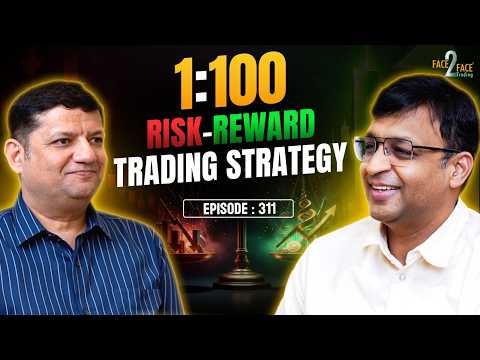
In a compelling Face2Face conversation, Mitessh Thakkar shared deeply practical insights with Vivek Bajaj, highlighting what truly separates long-term traders from short-term participants.
At the core of his philosophy is the belief that trading is a probability business. Markets are not about predicting winners with certainty but about managing probabilities. Even a 55–60% success rate, when combined with a favourable risk-reward ratio, can compound into exceptional long-term results.
Risk management, according to him, is the foundation of longevity. No single trade is allowed to harm more than a small portion of capital. Survival always comes before profits. This naturally ties into his emphasis on discipline over high accuracy. Chasing 90% accuracy is a trap; consistency, process, and defined risk matter far more.
A powerful takeaway was the importance of journaling. Maintaining detailed trade records helped him build self-awareness—not just of strategies, but of emotions, decision quality, and recurring behavioural patterns. Over time, this clarity sharpened execution.
He also stressed that simple charts outperform complexity. Clean price charts with limited indicators provide better clarity than cluttered setups. In today’s machine-driven markets, retail traders are competing with algorithms, making patience, positioning, and cost control more important than speed.
Ultimately, trading must be treated as a business, not gambling. Losses are business expenses, not failures. Aligning with long-term trends, using fundamentals as context rather than triggers, and accepting mental fatigue as part of the journey are essential. As he aptly put it, trading is the hardest way to make easy money—and only emotional strength and discipline sustain success over decades.

Your Speaker
Mitessh Thakkar

Your Host
Vivek Bajaj



_1741885609.webp)
_1739515883.webp)